25,000 HECTARES OF CSSVD-AFFECTED COCOA FARMS EARMARKED UNDER TCDP
Date: 06th June 2026
The Ghana Tree Crop Diversification Project (TCDP) is set to rehabilitate 25,000 hectares of cocoa farms affected by Cocoa Swollen Shoot Virus Disease (CSSVD) in the Western North and Eastern Regions under its Cocoa Farm Rehabilitation component.
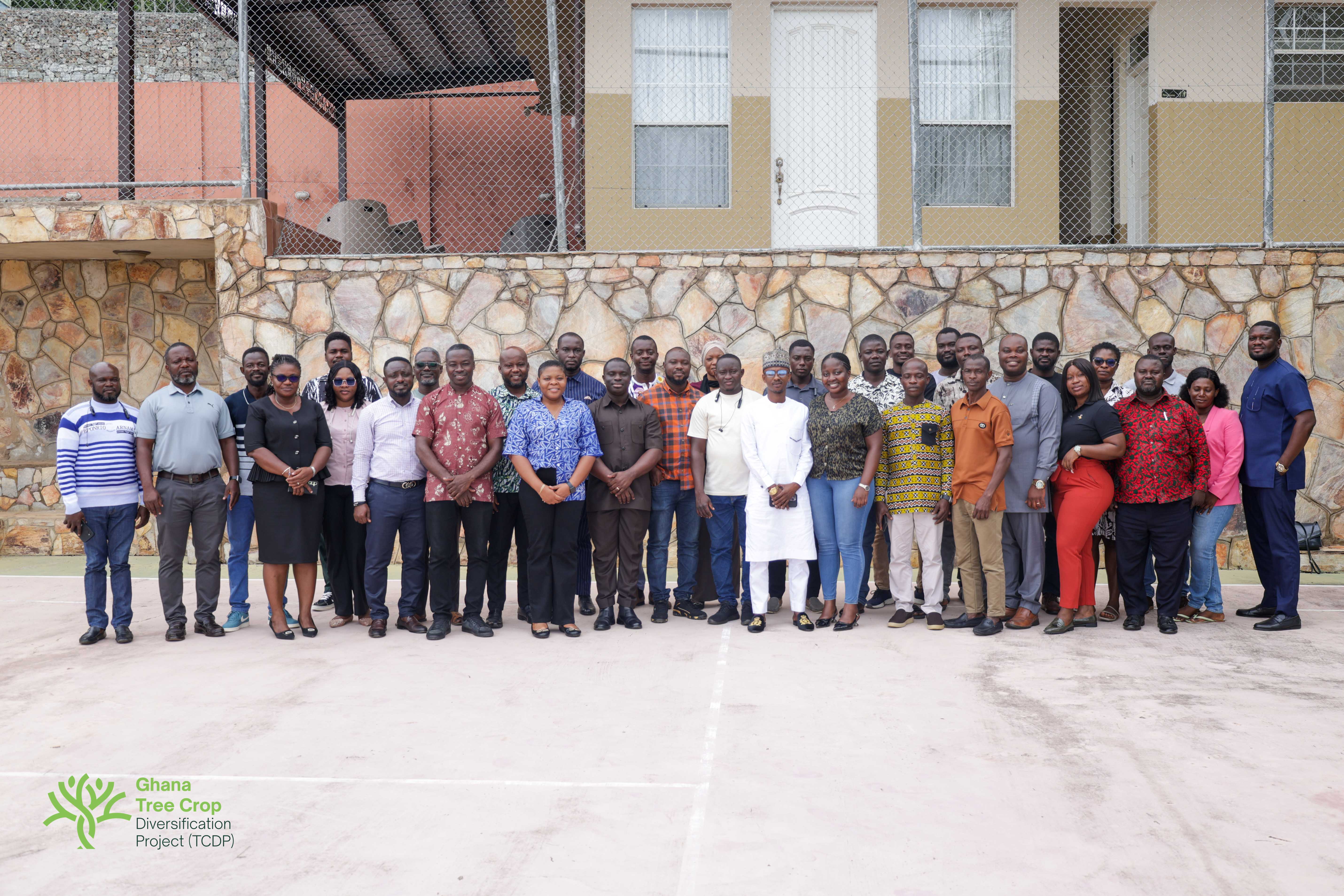
As part of the programme, ninety staff of the Ghana Cocoa Board (COCOBOD) have completed an intensive Environmental and Social (E&S) Safeguards training programme aimed at strengthening capacity for the responsible implementation of cocoa farm rehabilitation activities across affected farming communities.
The training, held in Aburi in the Eastern Region and facilitated by the World Bank in collaboration with COCOBOD, brought together participants from COCOBOD Head Office, regional and district offices of the Cocoa Health and Extension Division (CHED), as well as, technical specialists responsible for supporting the project.
The programme equipped participants with practical knowledge and skills in environmental risk management, stakeholder engagement, social inclusion, occupational health and safety, and community-centred development approaches to support effective project delivery.
The training adopted a highly interactive and participatory approach, enabling participants to engage in group discussions, case studies, peer-to-peer learning, and practical problem-solving exercises based on real-life situations encountered in cocoa-growing communities.
The sessions created opportunities for knowledge sharing and collaboration among participants from different operational levels, allowing them to draw on their diverse experiences to deepen understanding and strengthen the application of environmental and social safeguards in the field.
Speaking on the importance of the training, the Project Coordinator of the Cocoa Component of the Ghana Tree Crop Diversification Project, Mr. Suleman Wahab, said the initiative was critical to ensuring that cocoa rehabilitation interventions deliver sustainable benefits to farming communities.
"The essence of this training is to ensure that farming communities are not worse off after rehabilitation activities have been completed and farms are handed back to farmers. We want environmental and social considerations to be fully integrated into implementation so that communities benefit from sustainable and inclusive development outcomes," he said.
Participants expressed appreciation for the practical nature of the programme and its direct relevance to their work. They noted that the interactive learning sessions had enhanced their understanding of how to effectively engage communities, manage risks, promote social inclusion, and uphold environmental standards during project implementation.
Other News / Articles you might be interested in.
GSA AND COCOBOD PARTNER TO EMPOWER LBC EXECUTIVES ON KEY OPERATIONAL STANDARDS
The Ghana Standards Authority (GSA), Ghana Cocoa Board (COCOBOD), and representatives of Licensed ...
Read More
COCOA CAPITAL PLC BOND AND NOTE PROGRAMME
Read More
COCOA CAPITAL PLC UNDERTAKES A BOND AND NOTE PROGRAMME ON GSE
Cocoa Capital PLC, a subsidiary of Ghana Cocoa Board (COCOBOD) created under the ...
Read More